
How Tallow Helps Skin Healing for Eczema and Irritation
If you have spent years cycling through steroid creams, prescription emollients, and expensive moisturisers with little lasting relief for your eczema, you are not alone. Millions of people worldwide live with the discomfort of eczema and chronic skin irritation, and many are now turning back to one of history’s oldest skincare ingredients: tallow.
Rendered from beef or mutton fat, tallow was a household staple for centuries before modern cosmetics replaced it with synthetic alternatives. Today, a growing body of anecdotal evidence and emerging scientific interest is prompting dermatology researchers and natural health advocates to take a closer look at what this traditional fat can offer people with sensitive, inflamed, or eczema-prone skin.
This guide explores what tallow is, why it may support skin healing, and how to incorporate it into your routine safely and effectively.
What Is Tallow?
Tallow is rendered fat, typically sourced from beef (suet) or lamb. The rendering process involves slowly heating raw animal fat to separate the pure fat from proteins and impurities, resulting in a stable, shelf-stable product with a creamy texture.
Grass-fed tallow, in particular, has gained attention in the natural skincare community because of its fatty acid profile and fat-soluble vitamin content. When sourced from pasture-raised animals, tallow contains a notably different nutritional composition compared to fat from grain-fed livestock, including higher concentrations of conjugated linoleic acid (CLA) and vitamins A, D, E, and K.
Historically, tallow was used across many cultures as a skin protectant, wound salve, and barrier cream. It was applied to chapped hands, cracked lips, and irritated skin long before the invention of petroleum jelly or synthetic emollients.
The Science Behind Tallow and Skin Compatibility
One of the most compelling arguments for tallow in skincare is its structural similarity to human sebum. Sebum is the natural oil produced by your skin’s sebaceous glands, and it plays a central role in maintaining the skin barrier, retaining moisture, and protecting against environmental aggressors.
Tallow is composed predominantly of saturated and monounsaturated fatty acids, including:
- Oleic acid (omega-9): Also found in sebum, oleic acid helps maintain skin suppleness and facilitates the absorption of fat-soluble nutrients.
- Palmitic acid: A key component of the skin’s natural lipid barrier, palmitic acid supports moisture retention and structural integrity.
- Stearic acid: Known for its skin-repairing properties, stearic acid helps restore the epidermal barrier, which is often compromised in eczema.
- Palmitoleic acid: An omega-7 fatty acid with antimicrobial properties that may help protect damaged or inflamed skin from secondary bacterial infections.
Because these fatty acids closely mirror those found in healthy human skin, tallow is thought to absorb readily without clogging pores or creating an impermeable seal that prevents the skin from breathing.
For people with eczema, whose skin barrier function is fundamentally impaired, this biocompatibility is significant. Research into atopic dermatitis consistently highlights the role of a disrupted skin barrier and altered lipid composition in driving the cycle of inflammation, moisture loss, and irritation that characterises the condition. (Source: National Eczema Association – Skin Barrier)
Fat-Soluble Vitamins in Grass-Fed Tallow
Beyond fatty acids, grass-fed tallow is a natural source of several fat-soluble vitamins that are directly relevant to skin health:
Vitamin A (retinol): Vitamin A promotes healthy cell turnover, supports the repair of damaged skin tissue, and has long been used in dermatology to treat inflammatory skin conditions. Unlike synthetic retinoids, the naturally occurring retinol in tallow is delivered within a fat matrix that mirrors skin’s own chemistry. (Source: Linus Pauling Institute – Vitamin A and Skin)
Vitamin D: Vitamin D plays a role in immune regulation and has been studied in connection with atopic dermatitis. Low vitamin D levels have been associated with increased eczema severity in some clinical studies. (Source: Journal of Allergy and Clinical Immunology – Vitamin D and Atopic Dermatitis)
Vitamin E (tocopherol): A potent antioxidant, vitamin E helps neutralise free radicals that contribute to oxidative stress in inflamed skin. It also supports the maintenance of the skin barrier and has been shown in some studies to reduce eczema symptoms. (Source: National Institutes of Health – Vitamin E)
Vitamin K2: Less studied in the context of skincare but present in grass-fed tallow, vitamin K2 plays a role in tissue repair and has anti-inflammatory properties.
How Tallow May Help Eczema Specifically
Eczema, or atopic dermatitis, is characterised by chronic inflammation, a compromised skin barrier, intense itching, and heightened sensitivity to irritants. Conventional treatments often focus on managing inflammation (topical corticosteroids) or suppressing immune responses (calcineurin inhibitors), but they do not address the underlying barrier dysfunction.
Tallow may help eczema in several interconnected ways:
1. Restoring the Skin Barrier
The fatty acids in tallow, particularly stearic and palmitic acid, are building blocks of the ceramide-rich lipid layer that forms the outermost part of the skin barrier. Applying tallow topically may help replenish depleted lipids and restore barrier integrity, reducing transepidermal water loss (TEWL) — a key driver of eczema flares.
2. Reducing Inflammation
Oleic acid and CLA, both present in grass-fed tallow, have demonstrated anti-inflammatory properties in laboratory research. By supplying the skin with these bioactive fatty acids, tallow may help temper the inflammatory response at the site of irritation.
3. Deep Moisturisation Without Occlusion
Unlike petrolatum-based products, which work primarily by creating an impermeable barrier on the skin’s surface, tallow absorbs into the skin and provides moisture from within. This is particularly important for eczema sufferers, as over-occlusion can sometimes contribute to heat rash or folliculitis in sensitive skin.
4. Minimal Ingredient Risk
Many commercial moisturisers contain preservatives, fragrances, emulsifiers, and other additives that are common eczema triggers. Pure tallow (particularly single-ingredient products) eliminates these variables, making it an appealing option for those with multiple sensitivities.
What the Evidence Says
It is important to be transparent: large-scale randomised controlled trials specifically examining tallow for eczema do not yet exist. Most of the evidence is anecdotal, and while anecdote should not be dismissed, particularly when it is widespread and consistent, it should be held alongside an honest assessment of what clinical research has and has not confirmed.
What the research does support is the broader principle: the fatty acid composition of topical emollients matters for eczema management. Studies have shown that emollients rich in linoleic acid can help restore the skin barrier in atopic dermatitis, and that lipid-rich formulations are superior to simple humectants for long-term barrier repair.
A study published in the British Journal of Dermatology found that topical application of sunflower seed oil, which is rich in linoleic acid, improved barrier function in atopic skin, while olive oil (high in oleic acid) did not offer the same benefit. Tallow’s oleic acid content is worth noting here, as it may behave differently in the context of a full lipid matrix that more closely mirrors sebum. (Source: British Journal of Dermatology – Emollients and Barrier Function)
Research into the role of ceramides and physiological lipids in atopic dermatitis also lends indirect support to the logic behind tallow. Products designed to mimic the skin’s natural lipid profile are increasingly recognised as effective in managing eczema. (Source: American Academy of Dermatology – Moisturisers for Eczema)
How to Use Tallow for Eczema and Skin Irritation
If you want to try tallow for eczema or irritated skin, here are some practical guidelines:
Choose quality tallow. Look for tallow rendered from grass-fed, pasture-raised beef or lamb. Avoid products with added fragrances, essential oils, or other potential irritants, at least initially.
Patch test first. Apply a small amount to the inside of your wrist or elbow and wait 24 to 48 hours before applying to inflamed or broken skin.
Apply to damp skin. Like other emollients, tallow is most effective when applied immediately after bathing, while the skin is still slightly damp. This helps lock in moisture rather than simply sitting on top of dry skin.
Use consistently. Barrier repair takes time. Most dermatologists recommend consistent daily emollient use for at least four weeks before assessing results.
Start with small areas. If you are using tallow on active eczema patches, begin with a small area and monitor for any reaction. While tallow is generally well tolerated, every individual’s skin is different.
Combine with medical advice. Tallow should be considered a complementary approach, not a replacement for medical treatment, particularly in moderate to severe eczema. Always consult your GP or dermatologist before making significant changes to your skincare routine.
Potential Considerations and Limitations
Tallow is not suitable for everyone. People who follow vegan or vegetarian lifestyles will understandably prefer plant-based alternatives. Individuals with beef or lanolin allergies should exercise caution. Some people may also find the naturally mild scent of tallow off-putting, though high-quality rendered tallow is largely odour-neutral.
It is also worth noting that tallow is occlusive to some degree, which means it may not be the best choice during hot weather or for people who are prone to heat-related skin reactions.
Final Thoughts
Tallow represents an interesting convergence of ancestral wisdom and modern skin science. Its fatty acid profile, fat-soluble vitamin content, and structural similarity to human sebum make it a theoretically sound option for people seeking a natural, minimal-ingredient emollient for eczema and skin irritation.
While rigorous clinical trials are still needed to confirm its efficacy, the growing number of people reporting meaningful improvements in their eczema symptoms after switching to tallow-based skincare is difficult to ignore. For those who have exhausted conventional options or are simply looking for a cleaner alternative to synthetic emollients, tallow is worth investigating.
As with any skincare change, approach it thoughtfully, patch test carefully, and work alongside your healthcare provider to find the combination of treatments that works best for your skin.
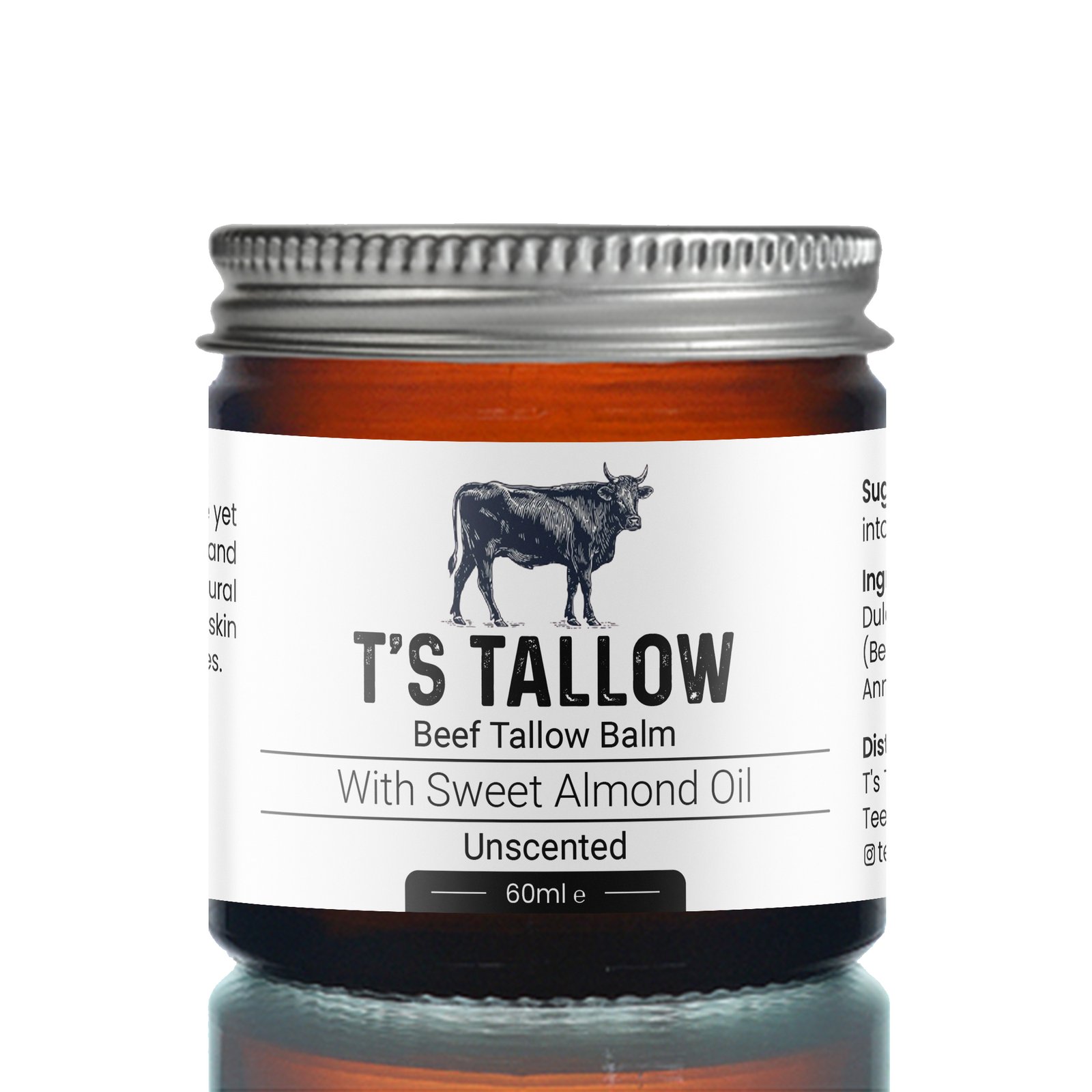
At Teestallow, we have some of the finest skincare products. For something natural and low risk, try our unscented tallow balm.
References and Further Reading
- National Eczema Association. (2024). Understanding the Skin Barrier and Eczema. https://nationaleczema.org/eczema/causes-and-triggers-of-eczema/skin-barrier/
- Linus Pauling Institute. (2023). Vitamin A and Skin Health. https://lpi.oregonstate.edu/mic/micronutrients-health/skin-health/nutrient-index/vitamin-A
- National Institutes of Health Office of Dietary Supplements. (2023). Vitamin E – Health Professional Fact Sheet. https://ods.od.nih.gov/factsheets/VitaminE-HealthProfessional/
- American Academy of Dermatology. (2024). How to select a moisturizer for eczema. https://www.aad.org/public/diseases/eczema/childhood/treating/moisturizers
- Danby, S.G. et al. (2013). Effect of olive and sunflower seed oil on the adult skin barrier. Pediatric Dermatology. https://doi.org/10.1111/j.1525-1470.2012.01802.x
- British Association of Dermatologists. (2024). Atopic Eczema Patient Information Leaflet. https://www.bad.org.uk/pils/atopic-eczema/
- Proksch, E., Brandner, J.M., & Jensen, J.M. (2008). The skin: an indispensable barrier. Experimental Dermatology, 17(12), 1063-1072. https://doi.org/10.1111/j.1600-0625.2008.00786.x
- teestallow.com